

Value: What Does Your Baler Wire, Bale Ties, and Hi-Tensile Wire Supplier Do to Help Your Business?
Value: What Does Your Baler Wire, Bale Ties, and Hi-Tensile Wire Supplier Do to Help Your Business?

Some synonyms we use for the word “value” are importance, worth, and usefulness. Thinking about the role we play in our customers’ business and how we can continue to provide value, we acknowledge that we take on certain responsibilities. Although bale ties and baler wire may be a small aspect of your business, you should still expect a certain degree of value from your supplier. The attributes and responsibilities listed below are what we believe makes a good wire supplier.
Monitor and Ensure Quality
All wire is not created equal. Wire is sourced from many different countries and continents. The quality of any bale ties and/or baling products you purchase starts at the mill where the raw material (steel) comes from and how it is treated throughout the forming process. As a supplier and manufacturer, it’s our responsibility to consistently monitor the quality coming from the source mill, as well as evaluate if that material is meeting the needs of our customers. Sometimes wire can be too dry, too stiff, or too oily for a customer’s needs. Making adjustments to supply and making adjustments to a customer’s specific needs are a key “value” your bale ties, baler wire, and carrier wire supplier should be providing.
Education
As a wire supplier and manufacturer of bale ties and baler wire, what we do is not rocket science. It is our business to know the wire and know which wire is best suited for a specific purpose. Taking our knowledge and passing that along to your customers is definitely one of the key values we bring to their business. Sometimes customers are using bale ties that are too long, and sometimes customers are using wire that’s too small in diameter. Understanding these problems, working through them with the customer, and providing solutions that are the most cost effective for the customer is a fundamental way your supplier can and should show their importance or value to your business.
Dependability and Timeliness
More times than not, we receive orders that come attached to aggressive and speedy timelines. Hearing the customer ask, “How fast can you get this out?” or “Can you ship this today?” is a daily occurrence. As a supplier and manufacturer, it’s our job to make adjustments and do our best to get the customer what they need in a timely fashion. Not being able to adjust and cater to those needs typically results in slower operational speed for the customer, as well as material piling up at the baling site causing both a safety hazard and a lot of additional work to keep the material sorted and contained. The dependability and timeliness of your supplier getting you the bale ties, baler wire, and carrier wire you need and their ability to adjust and cater to short timelines is a huge “value” they can bring to your business.
Packaging and Flexibility
Typically, bale ties come in either 250 pieces per bundle, 125 pieces per bundle, or 62 pieces per bundle. Lengthwise, customers typically order by the foot rounded to the next highest foot. As a supplier and manufacturer, we have the ability to adjust bundle sizes, lengths (including half-lengths), and the type of packaging used for the product we ship. Part of our role as a supplier includes asking the right questions and catering to the needs of our customers, such as adjusting and advising them on ways they could be saving money on material or adjusting their packaging to best suit their needs. Your current supplier should be in tune to what you need from your baler wire, bale ties, and carrier wire and be willing to make the necessary adjustments based on those needs.
Hopefully, your current supplier takes your needs seriously and is able to translate those needs into more value to your business and baling operation. Bale ties, baler wire, and stump wire are only a small part of the chain used to process and bale your recyclable materials, but if handled correctly, it should be one that causes very little stress. If your current supplier isn’t checking all the boxes above, maybe it’s time to find a supplier more in line with your needs and goals. A “valued” supplier often goes unnoticed but can bring a great deal of worth to your business and overall operations.
At Midwest Bale Ties, we pride ourselves on being a valued supplier and understanding the importance of quality bale ties and baler wire. Our staff is highly educated and dedicated to providing the utmost care and support for all of your baling wire and ties needs. Contact us today to see how we can help add value to your business!
What’s in Your Baler?
What’s in Your Baler?

People commonly ask, “So what do you do for a living?” I often explain that I work for a company called Midwest Bale Ties where we manufacture bale ties and baler wire. The response to that, 9 times out of 10 is, “Bale ties, huh? Like the stuff farmers use to bale hay?!” It turns out that hay or straw only makes up around 1%-2% of the material our products are used for. In fact, bale ties and baler wire are used to hold together a plethora of different materials. Each material – or straight – has its own characteristics and depending on those characteristics a different type of wire is best suited to keep the bale secure. Below we are going to briefly discuss different materials that are commonly baled and what types of wire are best suited to secure those bales.
Paper
Out of all the materials recycled in the US, paper makes up a larger percentage than plastic, glass, and aluminum combined. Falling within the paper classification, you have several types: OCC (old corrugated cardboard), mixed paper, old newspapers, high-grade de-inked paper, and pulp substitutes. From a composition standpoint, these materials, once compressed in a baler, do not have a lot of expansion and are able to form dense, well-compacted bales that have good memory. Because of these features, you should be able to use a standard galvanized or black annealed bale tie or baling wire to secure and store.
Plastic
One of the fastest growing recycled materials, plastic is broken down into 5 subheadings: HDPE (milk jugs, oil bottles, toys), PET (soda bottles, water bottles, medicine containers), LDPE (shrink wrap, plastic wrap, garment bags), PP (bottle tops, carpet, refrigerator containers), and PS (disposable utensils, meat packaging, protective packaging). Plastics are known to have good memory, so determining the correct wire or bale tie needed can be more difficult than other straights. Typically, plastic bales will use a larger gauge or thickness of wire or bale tie in order to combat the expansion of the material once the bale is released. It’s also not unheard of for bales of plastic to be secured with a hi-tensile wire, which is a unique type of steel designed to have a much higher break strength. Knowing your straight, bale dimensions, and bale weight is key in understanding what type of wire is needed to secure your bale.
Non-ferrous metals
Non-ferrous metals include aluminum, copper, lead, and nickel; essentially any metals that do no contain iron. Some common materials that fall under this classification would be aluminum cans and copper plumbing pipes. For the most part, metals tend to compact well and hold their form so standard bales ties and wires should be acceptable when securing a bale of non-ferrous metals.
Textiles
Believe it or not, clothing is frequently baled. Sometimes the bales of clothes are shipped to a different county to be reused, and sometimes the clothing is baled and later broken down to reuse the fibers to make other products. Nonetheless, textiles and clothing are common straights that use bale ties and/or baler wire to secure. From a memory perspective, textiles do not pose much of an issue. Typically, you are able to use standard galvanized bale ties or baler wire when securing bales of textiles.
Foam
A material we don’t often think about being baled and recycled is foam. Used for mattresses, seats, and many other products, foam has unbelievable memory. Because of this, the wire needed to secure the bundle must be stronger than your typical galvanized bale tie. Typically, foam is baled and secured using a hi-tensile, bright basic double-loop bale tie. Double-loop bale ties must be fitted to the exact specifications of your bale size, so it’s very important to measure your bale before placing an order.
Tires
Tires are everywhere, and they are a terrible material to send to a landfill because they take an extended time to break down. Because of this, they are typically baled and recycled using large industrial shredders. Bales made of tires are typically very dense and have a great deal of memory. A lot like foam, bales of this material are often secured using double-loop bale ties, though there have been instances when we have found our customers can also use single-loop bale ties to secure these bales. Again, knowing your bale dimensions and weight is helpful when communicating to your supplier what product you might need.
E-Waste
E-waste breaks down several ways and typically goes through an involved process which extrudes some of the more valuable elements of the material. From a characteristic standpoint, bales of e-waste would fall under plastics more than anything else. Single-loop bale ties or standard baler wire can be used because the material has lower memory.
Hay
This is the granddaddy of all bales. Hay has been baled since the beginning of the industrial revolution. The machines used to bale hay typically use a 14.5-gauge wire commonly referred to as “farmer wire” or “6500”, which is the amount of feet in a 100# coil of that material.
After digesting the information above, you should be a little more versed in the world of baling and which wire is associated with which type of baling. The types of materials being baled vary greatly, and it’s our hope that when you speak with someone about a bale tie and or baling wire you have a much broader understanding of this topic. As you can see, there is much more to a bale tie than just something used to bale hay. If you ever have any questions about your baling operation or would like to explore alternative wire options, please reach out to us with your bale dimensions, bale weight, and the material you are baling and we would be glad to discuss the most efficient, cost-effective way to fulfill your needs.
Why American-Made Bale Ties Are Your Best Bet for Quality and Safety
Why American-Made Bale Ties Are Your Best Bet for Quality and Safety

When it comes to choosing bale ties for your packaging and bundling needs, the market is filled with a plethora of options. However, the question of quality and safety is paramount, especially when dealing with materials like steel. In recent years, the superiority of American-made bale ties over overseas alternatives has become increasingly apparent.
The Quality of American-Made Steel:
One of the primary factors contributing to the higher quality of American-made bale ties is the quality of the steel used in their production. The United States is known for producing high-quality steel, adhering to strict industry standards and regulations. This results in a stronger, more durable product that is less likely to fail or cause safety concerns.
In contrast, overseas steel production, particularly in countries with lax regulations and oversight, may not meet the same rigorous standards. The use of low-quality steel in the production of bale ties can lead to a multitude of problems, such as corrosion, brittleness, and susceptibility to breaking under pressure.
Safety Hazards of Poor Quality Bale Ties:
The use of inferior bale ties made from low-quality steel can pose significant safety risks to employees and others involved in the handling, transport, and storage of baled materials. Some potential safety hazards include:
Breakage:
Bale ties made from low-quality steel may snap under pressure, causing bales to become unstable or fall apart. This can lead to accidents, injuries, or even fatalities if workers are in the vicinity.
Sharp edges:
Poorly made bale ties can have sharp edges, posing a risk of cuts or puncture wounds to workers handling them. In severe cases, these injuries could lead to infections or other complications.
Corrosion:
Low-quality steel is more susceptible to rust and corrosion, which can weaken the bale ties over time. This increases the likelihood of breakage and potential accidents.
Inconsistent sizing:
Inferior bale ties may not be manufactured to consistent dimensions, making them difficult to use and less effective in securing bales. This can lead to unstable bales, increasing the risk of accidents during handling and transport.
The Importance of Choosing American-Made Bale Ties:
Selecting American-made bale ties is not only an investment in quality and durability but also a commitment to the safety and well-being of your employees and others who may come into contact with your baled materials. By choosing domestically produced bale ties, you can have confidence in the quality of the steel used and the manufacturing processes, ensuring that your bales are securely bound and free from potential hazards.
The superior quality of American-made steel and the adherence to strict industry standards make American-made bale ties a safer and more reliable option than their overseas counterparts. Investing in high-quality bale ties can help prevent accidents and ensure the safety of your employees and others involved in the handling, transport, and storage of baled materials. Remember, when it comes to bale ties, quality and safety go hand in hand.
To guarantee the best quality and safety for your baling needs, consider reaching out to Midwest Bale Ties, a manufacturer of 100% American steel bale ties, for a trustworthy and dependable solution.
The Top 5 Common Uses of Baling Wire
The Top 5 Common Uses of Baling Wire
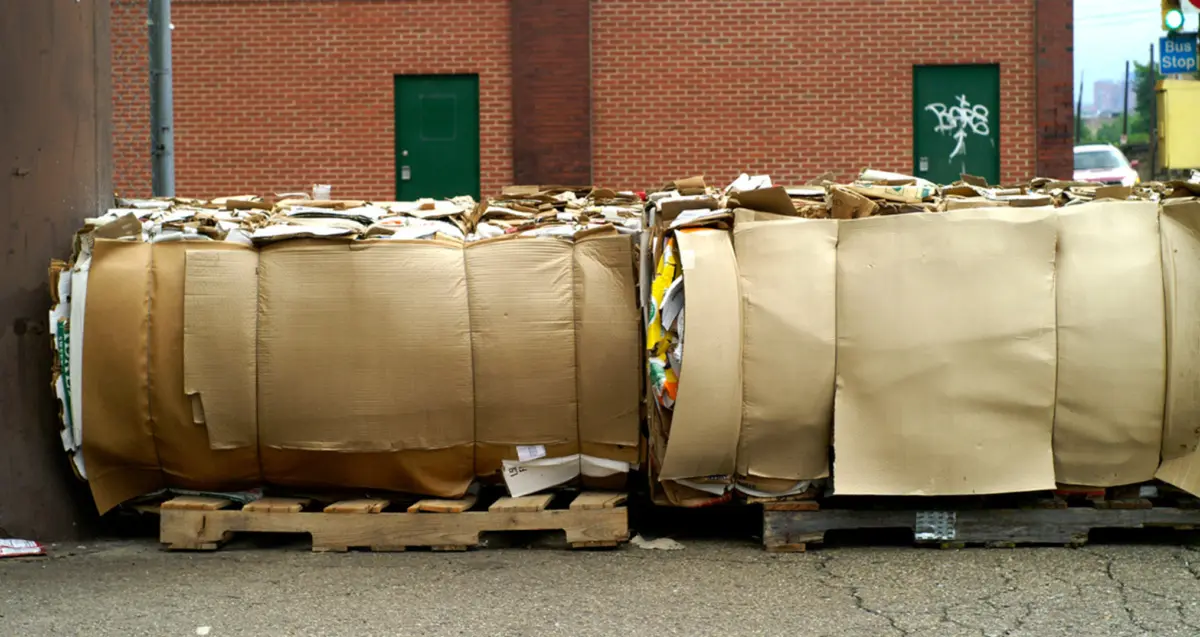
Baling wire, also known as farm wire or soft wire, is a versatile and durable material that has been used for a variety of purposes for many years. It is a type of wire that is made of low-carbon steel and is commonly used to secure and bundle materials. Here are the top five common uses of baling wire in recycling and industrial spaces:
Recycling:
Baling wire is essential in recycling facilities to compact and bundle various types of recyclable materials such as cardboard, paper, plastics, and metals. These materials are typically bulky and take up a lot of space, but baling wire helps to compress them into compact bales, making them easier to store, transport, and sell.
Construction:
Baling wire is widely used in the construction industry to secure and hold building materials in place. This wire is commonly used to tie rebar together, hold concrete forms in place, and secure scaffolding. Baling wire is also used in demolition projects to pull down walls and other structures. Additionally, baling wire is used for hanging acoustical ceiling grid systems, securing ductwork, and holding insulation in place.
Agriculture:
Baling wire has long been a staple of agriculture, primarily for securing hay bales. It is also used to tie up loose fence wires and to secure gates. In addition, baling wire is used to hold together bundles of crops during harvesting and transport.
Packaging:
Baling wire is sometimes used as a packing material for shipping heavy items. It can be wrapped around boxes or crates to hold them together and prevent them from shifting during transportation. Baling wire is strong enough to withstand the weight and pressure of heavy items.
Manufacturing:
Baling wire is often used in the manufacturing industry to secure and hold various types of products and components in place. It is commonly used to bundle wires and cables, secure pipes and tubes, and hold together large pieces of machinery. Additionally, baling wire is commonly used for hanging parts for powder coating, dipping items into a galvanization tank, and various finishings.
In conclusion, baling wire is a versatile and indispensable material in recycling and industrial spaces, as well as in the construction and manufacturing industries. Its strength and flexibility make it an ideal material for a wide range of applications, from compressing recyclable materials to securing building materials, hanging acoustical ceiling grid systems, securing ductwork, holding insulation in place, and finishing products in the manufacturing process. As such, baling wire will continue to play a critical role in these industries for many years to come.
To learn more about how Midwest Bale Ties can help you with your wire needs, call our experienced team at 765-364-0113.
Why Would my Business Benefit from Baling Waste Materials?
Why Would my Business Benefit from Baling Waste Materials?

Baling versus throwing materials in the trash might seem like a trivial choice, but it can have a significant impact on the environment, the economy, and even your bottom line. In this blog post, we will explore the benefits of baling and how it can help us reduce waste at your facility and protect our planet.
What is Baling?
Baling is the process of compacting waste materials into tight bundles, called bales, using specialized machines called balers. These machines are designed to compress and bind different types of materials, such as cardboard, plastic, metal, textiles and paper, into a compact form that is easier to handle, transport, and recycle.
Benefits of Baling
Reduces Waste Volume and Disposal Costs
Baling waste materials significantly reduces the volume of waste, which translates into lower disposal costs for businesses and organizations. By compacting waste into bales, you can fit more waste into a single container, reducing the frequency of pick-ups and lowering the transportation costs associated with waste disposal.
Increases Recycling Rates and Revenue
Baling also makes it easier to recycle waste materials by separating them into different categories and preventing contamination. For instance, baled cardboard is easier to handle and transport to recycling facilities, where it can be turned into new paper products. Similarly, baled plastics can be melted down and used to create new plastic products, reducing the need for virgin plastic production.
By increasing recycling rates, businesses can also generate additional revenue by selling their baled materials to recycling companies. This can help offset the costs of baling and waste disposal and contribute to a more sustainable business model.
Improves Workplace Safety and Cleanliness
Baling waste materials can also improve workplace safety and cleanliness by reducing the risk of accidents and spills. When waste is left unbaled, it can take up valuable space, creating hazards and clutter that can be dangerous for employees. By compacting waste into bales, businesses can free up space and reduce the risk of tripping, falling, or other accidents.
Protects the Environment
Finally, baling waste materials can have a positive impact on the environment by reducing the amount of waste that ends up in landfills. Landfills are not only expensive to operate, but they also contribute to greenhouse gas emissions and pose a risk to human health and the environment. By recycling and reducing waste, we can conserve natural resources, reduce pollution, and protect the planet for future generations.
Conclusion
Baling waste materials is a simple but effective way to reduce waste, save money, and protect the environment. By compacting waste into bales, businesses can increase recycling rates, generate revenue, improve workplace safety and cleanliness, and contribute to a more sustainable future. If you’re interested in starting to bale materials or if your company is already baling and needs assistance with your wire choices, reach out to our experienced team at 765-364-0113. Midwest Bale Ties is here to help. Let’s chat!
Understanding Wire Gauges and Break Strengths: A Comprehensive Guide
Understanding Wire Gauges and Break Strengths: A Comprehensive Guide

Wire gauges are essential elements in determining the thickness or diameter of a wire. The higher the gauge number, the thinner the wire. Conversely, the lower the gauge number, the thicker the wire. This fundamental concept, based on the American Wire Gauge (AWG) system, plays a significant role in defining the wire’s properties, including its break strength. In this post, we’ll explore different wire gauges and their associated break strengths.
American Wire Gauge (AWG)
The American Wire Gauge (AWG), also known as the Brown & Sharpe wire gauge, is a standardized wire gauge system used predominantly in North America for the diameters of round, solid, nonferrous, electrically conducting wires. The gauge starts at 40 and ends at 0000 (4/0). Remember, the thinner the wire, the higher its gauge number, and vice versa.
Break Strength
The break strength of a wire refers to the maximum amount of tension the wire can withstand without breaking or failing. It’s generally determined by the material’s inherent strength, the diameter of the wire, and the manufacturing process. Higher gauges, being thinner, will typically have lower break strengths, while lower gauges, being thicker, will have higher break strengths.
Wire Gauge and Break Strength: A Relationship
There is a direct relationship between wire gauge and break strength. The thicker the wire (lower gauge), the higher the break strength. Here’s a simplified representation of different gauges and their approximate break strengths:
- 40 AWG (0.0031 inches diameter): Given its extreme thinness, it is used in delicate applications like fine coil windings. It has a very low break strength, typically under 1 pound.
- 30 AWG (0.0100 inches diameter): Used in wrapping wire for electronics and other fine applications, it has a break strength of about 1 to 2 pounds.
- 20 AWG (0.0320 inches diameter): Commonly used in household appliances, its break strength is roughly 30 to 40 pounds.
- 10 AWG (0.1019 inches diameter): Used in wiring for larger appliances and heavy-duty machinery, its break strength is around 200 to 250 pounds. At Midwest Bale Ties, we have found the most common gauges in the baling wire industry are 10-14 gauge. You can view a list of our products and their various gauges here.
- 0 AWG (0.3249 inches diameter): Utilized for industrial and high-power applications, this thick wire offers a break strength of approximately 1,500 to 1,700 pounds.
- 4/0 AWG (0.4600 inches diameter): The largest gauge in the AWG system, 4/0 wire is often used in high-power electrical circuits. The break strength is typically over 4,000 pounds.
The figures given above are rough estimates and can vary based on the wire material and quality. Materials like copper, steel, and aluminum each have different tensile strengths, and that factor, combined with the wire’s diameter (gauge), will determine its break strength.
Understanding wire gauges and their corresponding break strengths is essential in a variety of fields, including electrical engineering, telecommunications, and even jewelry making. Selecting the right gauge for a specific application not only ensures optimal performance but also maintains safety standards. Whether you’re choosing a wire for crafting a delicate piece of jewelry or installing an industrial-grade electrical circuit, remember: the gauge matters!
Please note that while the information contained within this blog post serves as a general guideline, the wire experts at Midwest Bale Ties are always here to help when selecting wire for a particular use to ensure safety and efficiency. It’s important to consult with a knowledgeable supplier when making your bale tie and wire selection. Call our sales team today at 765-364-0113.